We drove 630 miles today with no corn, well, very little. We finally saw some near Benson, North Carolina and the last field was in West Virginia. The corn down here looks dead from the road though I have not had time to wander out in any. We did see one small field harvested, the fellow probably needed corn for his livestock.
We are near the ocean in Wilmington, North Carolina for a funeral. It is a quick trip down and a quick trip back home. We did get to enjoy breakfast with my sister this morning at the Bob Evans restaurant near Rio Grande. We can count on one hand the times we've seen each other in the last year so each time is special. Of course, I had to tell her friends that I went to China with Bob for a month back in 1985. People that work for the company or knew Bob are always amazed to hear that. Linda chirped in that I lost a lot of weight on that trip and I did. I said they served every part of the duck but the quack! I am not a fowl lover you know.
Maybe we will have a little more time to spend together on the trip back home. First, we are here to remember LuAnn's Uncle Joe who had a positive influence on her. He always wanted her to go to college and she did. She is a proud Xavier grad now like Tara, Matt and Kevin. Xavier has been good to us and we've been good to them!
I am still a Buckeye though so we have to support our Land Grant College. North Carolina is known for its universities so we are in the land of higher education. They need it with no more corn fields than I saw on the way down!
Of course our trip goes through the mountains from the Appalachians to the Blue Sky foothills of the Smokey's. It sure was "smokey" most of the morning in the early morning fog.
This old guy hasn't drove that far for quite a while so yes I am tired!
Time to clean up and go to the visitation.
It sure was a beautiful day but it got old being couped up in the car. I needed some corn fields to go look at.
Ed Winkle
Thursday, September 5, 2013
Wednesday, September 4, 2013
Beautiful Weather
We are in a streak of beautiful weather. Is that what it takes to raise a good crop? If you follow the CME crop prices, you would think so.
Recent crop tour reports are all over the board but the main thread is the crop is not as good as the market is bidding for and that showed in last week's grain price spike upward.
I am busy lining up next year's crop, which hybrids will I plant on what farms, how much corn versus soybeans and do I plant wheat again this fall? I will only plant wheat if I get some soybeans off early and can no-till the wheat right into the bean stubble. It takes an extra week for wheat to come up no-till since the soil is cooling off instead of warming up like it does in spring. Two weeks earlier worked out well for me this past year.
I like wheat for cover and to throw the pests out of rotation. That has great value for me. I like melting the residue back into the soil with my dry fertilizer and biological program to make the soil more fertile for future crops. Price wise, wheat is not worth considering unless I can raise 100 bushels per acre consistently. You can't depend on that here in southwest Ohio though we have been close to that the last two years. The 2011 crop was drowned out due to double rainfall.
My 50 bushel APH double crop soybeans got dinged a couple of times the past few years. They might do better when I can raise them like these.
Spreading everything evenly is a huge job few do well in my book. From residue to lime and dry fertilizer, a very even spread is critical to all operations. As SouthernOkie answered to this question this morning, "what does better growth in the chaff mean?......"
"The chaff in your wheat field is serving the same purposes as...the field wide tall rye we drill summer annuals into and then roll to form a mulch mat in plots...the same principle why we brush hog cool season plants residues to release warm season pasture (rather than let the CS residue stand and weather/oxidize)....mimicking SOME of the benefit seen by a leaf litter soil surface mulch model in closed canopy timber. The benefits are: 1) marked reduction in soil water evaporation rate, 2) lower soil temps overall and fluctuation in daily soil temps, 3) a good home for soil animals and microbes, 4) extended shallow root feeding time for plant roots during drought, 5) continuous canopy = fewer weeds, 6) etc etc
But...not all is 'a bed of roses'....the thickness of residue windrows and chaff piles may not soil compost sufficiently to preclude harboring of wheat pests afflicting the next wheat crop. A good home can have both 'good citizens' and 'black sheep' living under the same roof...not always in balance. The problem is the 20' header and a residue handler which won't throw an even 20' residue pattern back on the field.....per Dr. Dwayne Beck, the grandfather of no-till.
The strips you observe are real and good...if you read into Culler's philosophy(and many others I might add)...now you can imagine how the whole field might look if the residue were spread evenly over each acre inch rather than 'wind rowed' and baled! And WHY we broadcast and preach dry fertilizer/manure spread evenly!
The nice thing about good no-till....it makes you think (really think) about the whole farm program...not just a planter! You have to think before you can see...and think about what you do see!"
Recent crop tour reports are all over the board but the main thread is the crop is not as good as the market is bidding for and that showed in last week's grain price spike upward.
I am busy lining up next year's crop, which hybrids will I plant on what farms, how much corn versus soybeans and do I plant wheat again this fall? I will only plant wheat if I get some soybeans off early and can no-till the wheat right into the bean stubble. It takes an extra week for wheat to come up no-till since the soil is cooling off instead of warming up like it does in spring. Two weeks earlier worked out well for me this past year.
I like wheat for cover and to throw the pests out of rotation. That has great value for me. I like melting the residue back into the soil with my dry fertilizer and biological program to make the soil more fertile for future crops. Price wise, wheat is not worth considering unless I can raise 100 bushels per acre consistently. You can't depend on that here in southwest Ohio though we have been close to that the last two years. The 2011 crop was drowned out due to double rainfall.
My 50 bushel APH double crop soybeans got dinged a couple of times the past few years. They might do better when I can raise them like these.
Spreading everything evenly is a huge job few do well in my book. From residue to lime and dry fertilizer, a very even spread is critical to all operations. As SouthernOkie answered to this question this morning, "what does better growth in the chaff mean?......"
"The chaff in your wheat field is serving the same purposes as...the field wide tall rye we drill summer annuals into and then roll to form a mulch mat in plots...the same principle why we brush hog cool season plants residues to release warm season pasture (rather than let the CS residue stand and weather/oxidize)....mimicking SOME of the benefit seen by a leaf litter soil surface mulch model in closed canopy timber. The benefits are: 1) marked reduction in soil water evaporation rate, 2) lower soil temps overall and fluctuation in daily soil temps, 3) a good home for soil animals and microbes, 4) extended shallow root feeding time for plant roots during drought, 5) continuous canopy = fewer weeds, 6) etc etc
But...not all is 'a bed of roses'....the thickness of residue windrows and chaff piles may not soil compost sufficiently to preclude harboring of wheat pests afflicting the next wheat crop. A good home can have both 'good citizens' and 'black sheep' living under the same roof...not always in balance. The problem is the 20' header and a residue handler which won't throw an even 20' residue pattern back on the field.....per Dr. Dwayne Beck, the grandfather of no-till.
The strips you observe are real and good...if you read into Culler's philosophy(and many others I might add)...now you can imagine how the whole field might look if the residue were spread evenly over each acre inch rather than 'wind rowed' and baled! And WHY we broadcast and preach dry fertilizer/manure spread evenly!
The nice thing about good no-till....it makes you think (really think) about the whole farm program...not just a planter! You have to think before you can see...and think about what you do see!"
I can't say it any better than my friend just did.
Ed Winkle
Tuesday, September 3, 2013
Labor Day Weekend
I posted some pictures I took over this Labor Day Weekend to my Facebook account. It is an easy place to post pictures. Jeff Littrell posted his pictures of his week long trip from Minnesota through Iowa to Ohio and up to northwest Ohio, Michigan and back to Minnesota. They are worth looking at, even if you have to join Facebook to do it. I don't think you do and many refuse to participate. That's a personal decision.
It's no worse than me giving my information to Google through this blog. January will mark five years of posting a blog nearly every day. Thank you followers and readers.
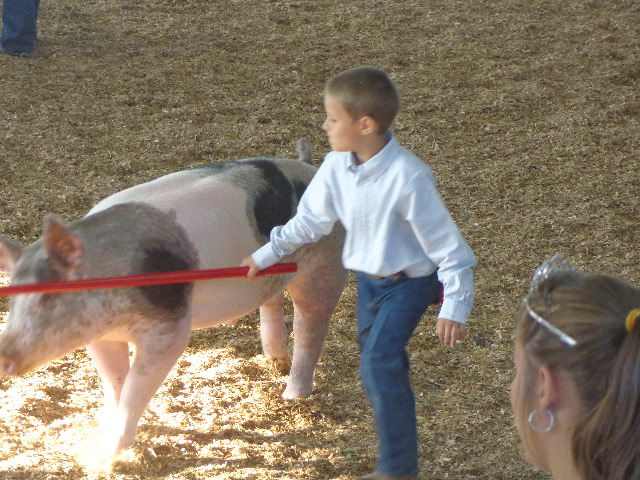
As I posted those pictures, I saw what a busy holiday it was for us like so many other people. It starts out in Rushville, Indiana at First Choice seeds and takes us to Columbus for a birthday party, back to church in our own community and ends up in Hillsboro where LuAnn works and we visit often. We watched Corbin and Claire show their first pigs last night at the Highland County Fair Open Barrow Show.
Corbin did a great job showing his "crazy Abt pig." Our son in law Kevin bred pigs that showed all over southwest Ohio this summer. Their unique breeding made them a little different from confirmation to personality so we have to tease him a little. Corbin was able to keep the pig off the rail until the last few moments when the pig got tired and stubborn. Claire wasn't so fortunate as her pig pretty much stayed near the gate he came out of. A four year old doesn't have much force against a 270 lb pig. They both did a super good job though and we were proud of them.
It was a great weekend and we even got a little bit of rain out of it. Kentucky got up to 4 inches which should help the soybeans, especially since many of theirs are planted after wheat. The Midwest varies greatly, though. I hope you got what you needed but I hear most did not. We could have stood 2 inches this weekend pretty easily but .3 is better than none.
LuAnn's uncle Joe passed away yesterday so we are headed to Wilmington, North Carolina Thursday for his service. Joe was very influential on LuAnn like my aunts and uncles were to me. Wilmington is where we travelled eight years ago for the birth of our grand child Liam. So much has happened in eight years!
We have Canadian cool air this morning so fall is in the air. It won't be that long until harvest and the silage choppers have already started chopping across the country.
Another crop year is coming to the start of its close. Have a great day and a great week!
Ed Winkle
It's no worse than me giving my information to Google through this blog. January will mark five years of posting a blog nearly every day. Thank you followers and readers.
As I posted those pictures, I saw what a busy holiday it was for us like so many other people. It starts out in Rushville, Indiana at First Choice seeds and takes us to Columbus for a birthday party, back to church in our own community and ends up in Hillsboro where LuAnn works and we visit often. We watched Corbin and Claire show their first pigs last night at the Highland County Fair Open Barrow Show.
Corbin did a great job showing his "crazy Abt pig." Our son in law Kevin bred pigs that showed all over southwest Ohio this summer. Their unique breeding made them a little different from confirmation to personality so we have to tease him a little. Corbin was able to keep the pig off the rail until the last few moments when the pig got tired and stubborn. Claire wasn't so fortunate as her pig pretty much stayed near the gate he came out of. A four year old doesn't have much force against a 270 lb pig. They both did a super good job though and we were proud of them.
It was a great weekend and we even got a little bit of rain out of it. Kentucky got up to 4 inches which should help the soybeans, especially since many of theirs are planted after wheat. The Midwest varies greatly, though. I hope you got what you needed but I hear most did not. We could have stood 2 inches this weekend pretty easily but .3 is better than none.
LuAnn's uncle Joe passed away yesterday so we are headed to Wilmington, North Carolina Thursday for his service. Joe was very influential on LuAnn like my aunts and uncles were to me. Wilmington is where we travelled eight years ago for the birth of our grand child Liam. So much has happened in eight years!
We have Canadian cool air this morning so fall is in the air. It won't be that long until harvest and the silage choppers have already started chopping across the country.
Another crop year is coming to the start of its close. Have a great day and a great week!
Ed Winkle
Monday, September 2, 2013
The Switch Has Turned
The May beans are not upright anymore, they are crouched down in the final stages of reproduction, pod filling. The corn has went from bright green to yellowing as the summer season winds down. It is only 3 weeks until the fall or autumnal solstice.
"I live on some wet bottom clay soils, so drought is an inconvenience, even 30 miles away is some light ground where lack of rain is a serious thing.
Today looking at the crops here, it is like a switch was flipped. Yesterday it was stressed and all, sure its dry.
But today, wow, bean rolled in patches on the fields, corn is turning brown on the bottom leaves, brown on the top leaves.
Very sudden change, this heat just caught up to everything."
"I live on some wet bottom clay soils, so drought is an inconvenience, even 30 miles away is some light ground where lack of rain is a serious thing.
Today looking at the crops here, it is like a switch was flipped. Yesterday it was stressed and all, sure its dry.
But today, wow, bean rolled in patches on the fields, corn is turning brown on the bottom leaves, brown on the top leaves.
Very sudden change, this heat just caught up to everything."
We can say the same in Ohio and it isn't heat and it is lack of moisture. Do we really know what we are looking at? Is it tillage or the lack of it?
Do you have restless tillage syndrome or lackluster no-till religion? After another summer of scouting, either one will fail you. I've seen tilled and no-tilled fields look good then peter out before the switch turned. The most eye catching thing I saw was planting date. The fields planted May 21 look best with May 15 coming right behind. All other planting dates fall short as far as crop progress to this date here and in other states.
Still, those dates have some beans "rolling" and 112 day corn that looks like it is a month or two farther ahead.
Isn't there more to this than tillage, no-till, drought, flood, heat cold? Isn't it more than lack of gypsum and cover crops to build soil water holding capacity?
This picture on Crop Talk from my friend Brian in Indiana taken on his way to Missouri looks like the top of corn fields around here, even though we have had better growing conditions than they have.
Ed Winkle
Do you have restless tillage syndrome or lackluster no-till religion? After another summer of scouting, either one will fail you. I've seen tilled and no-tilled fields look good then peter out before the switch turned. The most eye catching thing I saw was planting date. The fields planted May 21 look best with May 15 coming right behind. All other planting dates fall short as far as crop progress to this date here and in other states.
Still, those dates have some beans "rolling" and 112 day corn that looks like it is a month or two farther ahead.
Isn't there more to this than tillage, no-till, drought, flood, heat cold? Isn't it more than lack of gypsum and cover crops to build soil water holding capacity?
This picture on Crop Talk from my friend Brian in Indiana taken on his way to Missouri looks like the top of corn fields around here, even though we have had better growing conditions than they have.
Ed Winkle
Sunday, September 1, 2013
The Farm People Are Coming!
We just got home from a 2 year old grand daughter's birthday party. Her four year old brother had to call her grandpa up and tell him the farm people are coming! He asked him, do they have names? He quickly said, grandma and grandpa! You know them, the ones who live on the estate! We had to laugh at that one, out of the mouth of babe's Art Linkletter said.
He was has been here to ride the snowmobile or the Mule many times and the whole deal definitely left an impression! Of course, his grandma Lu and dad are always asking him if he wants to go to the farm or ask if he had fun there. Isn't that funny how non-farm people see us down on the farm?
We had to bring the $50 peach pie from the auction here at Dinner in the Fields. We found out Leadership Clinton made $1300 from that auction and with a $2500 matching donation they cleared $8000 to keep the Dinner in the Fields and other activities going! I think that is grand!
How we speak with our fields and how we treat our city cousins are important. The smallest gestures can make the most impact. There are so many ways to impact people more than big media does and we all know they don't always do a very good job!
They always ask at this time of the year, how are the crops looking? It's hard to tell them that the once pretty green fields are dying prematurely. How could late May corn be dropping ears in late August?
LuAnn is getting it. We had a good discussion about glyphosate, GMO's, and Goss's Wilt on the way up. She can pick it out now from the car. We just watched US Farm report and the "drought damaged" corn they were showing. She said there it is, on the ears and stalks, just like you showed me! The video footage showed black lesions on the ears and the stalks that was visible from 1000 miles away from our easy chairs.
How can we grow corn like our handful of friends are growing? Look at my old posts and keep reading and looking and asking questions.
There are no dumb questions. The farm people are coming!
Ed Winkle
He was has been here to ride the snowmobile or the Mule many times and the whole deal definitely left an impression! Of course, his grandma Lu and dad are always asking him if he wants to go to the farm or ask if he had fun there. Isn't that funny how non-farm people see us down on the farm?
We had to bring the $50 peach pie from the auction here at Dinner in the Fields. We found out Leadership Clinton made $1300 from that auction and with a $2500 matching donation they cleared $8000 to keep the Dinner in the Fields and other activities going! I think that is grand!
How we speak with our fields and how we treat our city cousins are important. The smallest gestures can make the most impact. There are so many ways to impact people more than big media does and we all know they don't always do a very good job!
They always ask at this time of the year, how are the crops looking? It's hard to tell them that the once pretty green fields are dying prematurely. How could late May corn be dropping ears in late August?
LuAnn is getting it. We had a good discussion about glyphosate, GMO's, and Goss's Wilt on the way up. She can pick it out now from the car. We just watched US Farm report and the "drought damaged" corn they were showing. She said there it is, on the ears and stalks, just like you showed me! The video footage showed black lesions on the ears and the stalks that was visible from 1000 miles away from our easy chairs.
How can we grow corn like our handful of friends are growing? Look at my old posts and keep reading and looking and asking questions.
There are no dumb questions. The farm people are coming!
Ed Winkle
Saturday, August 31, 2013
Cover Crop Vaccine
"Vaccinate your soil with a cover crop" is this new catchy ad from NRCS. Is that misleading? By planting a cover crop we really don't add anything but a seed that will give off root exudation as it sprouts and grows. By inoculating or vaccinating your soil with these new gases, we do cause many beneficial organisms to repopulate or expand their population. The result is a healthier place for our intended crop to grow.
I heard a fellow say no wonder SabrEx works so well, everyone uses glyphosate and glyphosate kills beneficial trichaderma fungi. There are other ways to promote beneficial trichaderma and other bacteria and fungi.
"At the end of the growing season you may be ready to rest, but your soil is not. One final effort can make a big difference: cover cropping. Even small gardens will benefit from the use of cover crops, or "green manures". Tilling, weeding, harvesting and foot traffic of most home gardens tends to destroy soil structure. Planting cover crops is an easy way to revitalize the soil, and help soil tilth and subsequent plant growth. Cover crops are planted in vacant space and worked into the soil after they grow instead of being eaten. They provide a number of advantages to the otherwise wasteful use of space during your garden's off-season.
Cover crops help to retain the soil, lessen erosion, and decrease the impact of precipitation on the garden by slowing the runoff of water. They also reduce mineral leaching and compaction, and suppress perennial and winter annual weed growth. The top growth adds organic matter when it is tilled into the garden soil. The cover crop's root system also provides organic matter and opens passageways that help improve air and water movement in the soil.
Success in the growth of cover crops requires proper selection of the kind of cover crop, correct timing of seeding, and good management techniques. There are many traditional cover crops to select from, including annual ryegrass, winter rye, winter wheat, oats, white clover, sweet clover, hairy vetch and buckwheat. Grasses are easier to grow than legumes such as clover because they germinate more quickly and do not require inoculation. Small seeded crops are more difficult to establish than large seeded types such as oats and buckwheat. In poorly drained areas, grasses may be easier to get started. Winter rye and ryegrass grow in a very dense habit and are much more effective at shading out weeds than oats or small seeded legumes. Availability of seed and cost are other important considerations.
It's time to start vaccinating your soil if you haven't already!
Ed Winkle
I heard a fellow say no wonder SabrEx works so well, everyone uses glyphosate and glyphosate kills beneficial trichaderma fungi. There are other ways to promote beneficial trichaderma and other bacteria and fungi.
"At the end of the growing season you may be ready to rest, but your soil is not. One final effort can make a big difference: cover cropping. Even small gardens will benefit from the use of cover crops, or "green manures". Tilling, weeding, harvesting and foot traffic of most home gardens tends to destroy soil structure. Planting cover crops is an easy way to revitalize the soil, and help soil tilth and subsequent plant growth. Cover crops are planted in vacant space and worked into the soil after they grow instead of being eaten. They provide a number of advantages to the otherwise wasteful use of space during your garden's off-season.
Cover crops help to retain the soil, lessen erosion, and decrease the impact of precipitation on the garden by slowing the runoff of water. They also reduce mineral leaching and compaction, and suppress perennial and winter annual weed growth. The top growth adds organic matter when it is tilled into the garden soil. The cover crop's root system also provides organic matter and opens passageways that help improve air and water movement in the soil.
Success in the growth of cover crops requires proper selection of the kind of cover crop, correct timing of seeding, and good management techniques. There are many traditional cover crops to select from, including annual ryegrass, winter rye, winter wheat, oats, white clover, sweet clover, hairy vetch and buckwheat. Grasses are easier to grow than legumes such as clover because they germinate more quickly and do not require inoculation. Small seeded crops are more difficult to establish than large seeded types such as oats and buckwheat. In poorly drained areas, grasses may be easier to get started. Winter rye and ryegrass grow in a very dense habit and are much more effective at shading out weeds than oats or small seeded legumes. Availability of seed and cost are other important considerations.
It's time to start vaccinating your soil if you haven't already!
Ed Winkle
Friday, August 30, 2013
What Harvest?
What harvest? Wheat harvest! Leave out the e and wheat becomes what? What happened is what I wondered as we flew home from Seattle through Minneapolis. We had a pretty clear afternoon for viewing and I was amazed at the number of wheat fields, the lack of corn fields, especially good looking ones and the severe lack of soybean fields!
What I saw across those 1000 miles really made you wonder how accurate the USDA numbers really are. A few people I know thought wheat could rally big after the record corn rally last fall but it never happened. The opposite happened and I saw evidence of it from the airplane. We saw so many wheat fields across the US yesterday!
This picture from last year in Minnesota is more what I was expecting to see.
I started writing this because I found this incredible and unusual video of wheat harvest. My favorite is still the Glenvar harvest video in Australia.
Our own wheat harvest here and in this region was excellent. I hope it doesn't turn out to be the best crop we raised this year. It was so good our dear USDA sent a special survey in yesterday's mail to see how good ours was! I wonder how many people got that same mailing?
My dear salesman Leon said he had a wheat for me that yielded 128 bushels per acre for our friend in upstate New York. After this year's results, I wonder, should we try it?
If you have enough acres, I suppose any acres, wheat is a good rotational crop. The extra residue and coverage over winter is enough to make it pay if the double crop soybeans or radishes after it pan out. They always have for me, so I suppose there is no reason for me to not consider wheat. At today's corn, soybean and wheat price, I see no reason to not consider wheat in my situation.
It's time to order wheat seed and past time to order radish, although it is always a good time to order either one.
What are you planning on sowing this fall? It's always a good time to sow something.
Ed Winkle
What I saw across those 1000 miles really made you wonder how accurate the USDA numbers really are. A few people I know thought wheat could rally big after the record corn rally last fall but it never happened. The opposite happened and I saw evidence of it from the airplane. We saw so many wheat fields across the US yesterday!
This picture from last year in Minnesota is more what I was expecting to see.
I started writing this because I found this incredible and unusual video of wheat harvest. My favorite is still the Glenvar harvest video in Australia.
Our own wheat harvest here and in this region was excellent. I hope it doesn't turn out to be the best crop we raised this year. It was so good our dear USDA sent a special survey in yesterday's mail to see how good ours was! I wonder how many people got that same mailing?
My dear salesman Leon said he had a wheat for me that yielded 128 bushels per acre for our friend in upstate New York. After this year's results, I wonder, should we try it?
If you have enough acres, I suppose any acres, wheat is a good rotational crop. The extra residue and coverage over winter is enough to make it pay if the double crop soybeans or radishes after it pan out. They always have for me, so I suppose there is no reason for me to not consider wheat. At today's corn, soybean and wheat price, I see no reason to not consider wheat in my situation.
It's time to order wheat seed and past time to order radish, although it is always a good time to order either one.
What are you planning on sowing this fall? It's always a good time to sow something.
Ed Winkle
Subscribe to:
Posts (Atom)