Tuesday, May 31, 2011

Plant or Bust


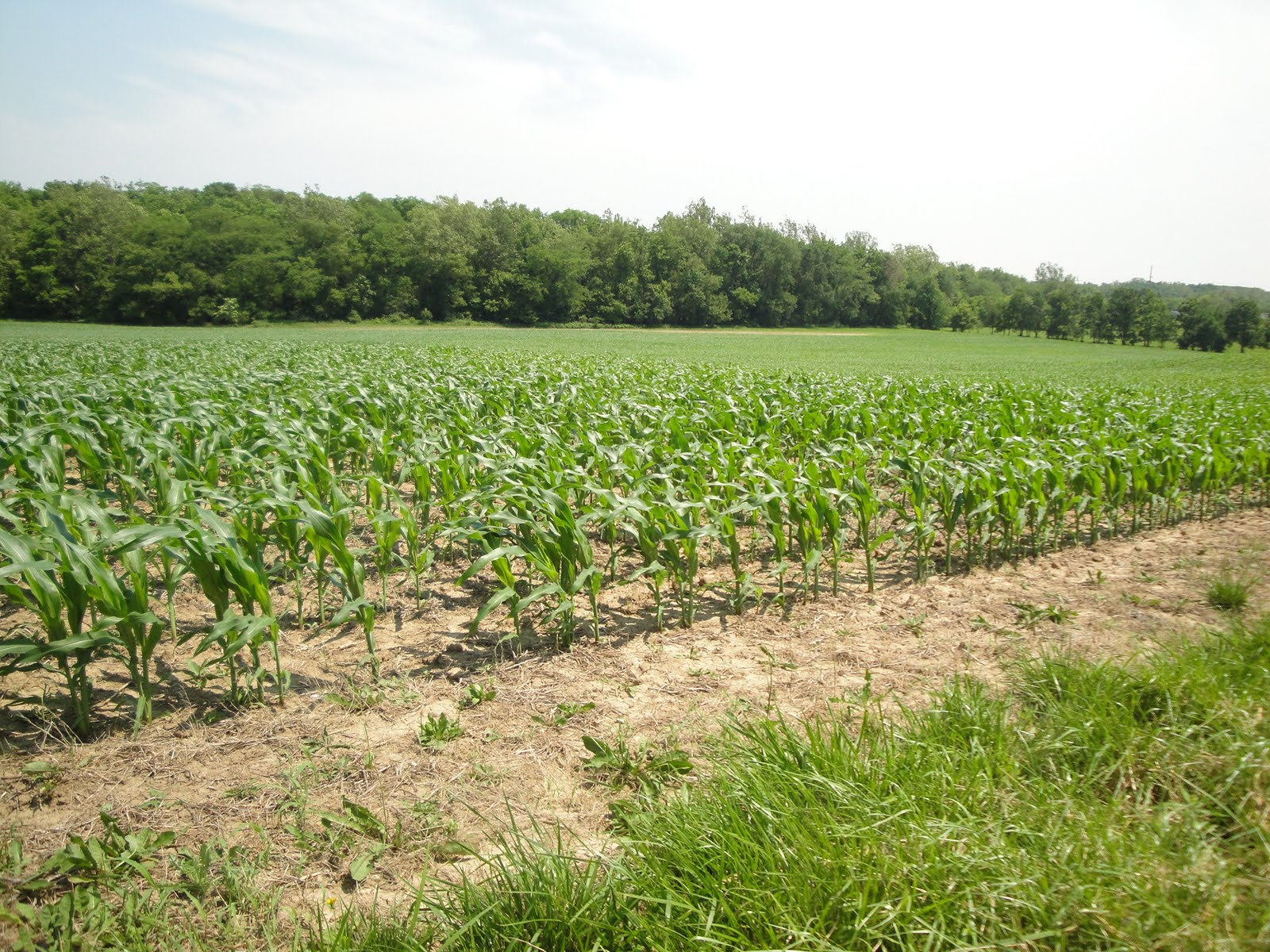
I thought I would pass this on to my farmer reader friends. The picture is our smallest corn a year ago today.

"Today marks corn’s crop insurance D-Day for much of North Dakota, southern Illinois kicks in May 31 and most of the core Corn Belt June 5. After those dates, growers who bought Revenue Protection policies with harvest-price coverage must decide to (1) abandon corn and claim prevented planting coverage of $6.01/bu.; (2) plant corn late and take 1% per day reduced insurance coverage up to 25 days but be rewarded if harvest prices are higher than $6.01/bu.; (3) skip the prevented planting claim and switch to soybeans (4) take prevented planting indemnity and plant soybeans 25 days later (“This turns a lot of people off because it cuts your insurance payment in half and hurts your APH yields,” says Farm Credit Services of Mid-America crop insurance specialist Cory Gault. So let’s assume #4 is not a viable alternative).

Normally, corn growers would default to soybeans. But surprisingly, crop insurance agents like Jarrod Bennett (see last post) expect growers to take the “safe,” no-risk option this year, even if it means collecting prevented planting claims and taking the summer off. He says most of his clients will collect $400-$600 per acre with a pp claim, so who would take the risk of planting soybeans? Farmers in Ohio I talked with are running the numbers, but growers like Mark Ruff call this a “sad but true” situation. He’s toying with the idea that maybe he’d tile some of those wet empty fields this summer, rather than try to plant beans.

In today’s FarmDocDaily e-newsletter, University of Illinois economist Gary Schnitkey details his analysis, and you can summarize it as a “plant corn first, but take the summer off if you can’t” conclusion.
“Basically, I don’t see soybeans competing economically with corn prior to the end of May. After the end of May, then soybeans have to compete with prevented planting corn and prevented planting corn wins,” he says. By Schnitkey’s updated calculations, a grower with Revenue Protection or Yield coverage would net $382/acre to $466 with a 150-bu. yield guarantee on corn by taking a prevented planting claim. Growing soybeans with no yield loss and corn with reduced yield prospects would net about $373 for corn or $363/acre for soybeans because of higher direct and machinery costs. In other words, someone with 85% coverage and a 150-bu. APH yield would make about $100 per acre more with a prevented planting claim than if they took the weather risk and got just 120 bu. corn.

Schnitkey assumes the grower will average corn prices of $6.40 and soybeans $13.30 for the season. With higher prices or yields, the results could swing the other direction. So if you’re a bull who thinks corn will be at $9 by harvest, then keep planting corn as long as possible. Or you could take the summer off.

A blog posting by University of Minnesota Extension economist Kent Olson and Extension agronomist Jeff Coulter today didn’t analyze the insurance choices, but cautioned growers not to be too quick to substitute soybeans for corn. Based on historic Minnesota farm records from the center for Farm Financial Management, they had forecasted net revenue per acre at $443 for 2011 corn, versus $195 for soybeans.

“These estimates indicate a tremendous advantage for corn over soybean and the need for a large decrease in corn yield before soybean is more profitable than corn,” Olson and Coulter said. That’s especially true since corn planting problems will likely lead to higher prices this summer; even with no change in prices, you’d need a 25% drop in corn yield to make someone better off planting soybeans."

It will be interesting to see how all this shakes out. I know corn is going in the ground in southwest Ohio.

Ed

Last Day of May


It's the last day of May and still little is planted in Ohio. We are just getting dry enough to do anything in the fields. The fertilizer trucks are everywhere and I saw some spread. The planters are not out in full force yet. I did see a neighbor side dressing corn this morning, very unusual this year and the only one I have seen in our travels.

I got all my FSA papers finalized and now have to remember to get back in there to firm up planted acres by July 15. That is also the day we can start mowing the CRP waterways and boy are they a mess. I have poison hemlock to mow and spray as usual as it tries to keep a foothold in our fields.

My reported yields since we moved here seven years ago this weekend are very good and I am proud of them. I had only one bad year, 2005 when we planted corn after corn very early, probably didn't get enough nitrogen on and it snowed and froze on it this weekend six years ago. Today it will be near 90 degrees again. What a contrast in weather in a few short years.

We skipped the Taste of Cincinnati this weekend as it was so hot but we did go down to the city for the Reds game last night. Remember when the the Milwaukee Brewers were the Milwaukee Braves? I do. They changed names in 1965 when Atlanta became the Braves and Hank Aaron made them famous.

The Reds played really well and had lots of hits. It was a fun game to watch for the 21,000 plus who watched. The pitching was good enough to hold on for a 7-3 win. The fireworks went off for the three run home run and they had a nice Memorial Day tribute for our soldiers throughout the game.

Greece is in the news again as they cannot pay their debt and Germany is tired of supporting the whole Euro dollar system. I can't blame them.

Everyone is well here and I hope you all are too.

Have a great first of June.

Ed Winkle

Monday, May 30, 2011

Memorial Day


Most of the Memorial Day Salutes are at 10 AM this morning. I remember playing taps all of the years I was big enough to play when I was in school.

The original song is a very long piece so it was shortened to the version we hear today. It is often a tear jerker for many people when it is played.

We sure have plenty of good reasons to visit our local cemetery and watch the salute to our soldiers who paid the ultimate sacrifice for our freedom.

Yesterday we took a 100 mile trip to my sister's for her grandson's birthday. It was the first hot day we have had this summer. I saw some of Ohio's 11 percent corn planted. As you go east out of Hillsboro you start seeing some all the way down to the Ohio River. It's not a major production area but at least they have corn out of the ground.

We had 3-4 inches of rain in the 30 mile radius here last week so we are still stationary. It is hard to wait but if you don't, this heat will turn the soil into brick.

We saw our first hay cut and it smelled good. Some windrows will be baled this afternoon. There is so much hay and grass to mow in that 100 miles it would take every farmer a week just to mow it.

The cemeteries really look nice for Memorial Day and the farmers here are just ready to hit every dry field they can find. It will be difficult to find fields ready to plant that don't turn into concrete after planting. It looks like we may have a 10 day window to plant here the first of June.

Ed

Sunday, May 29, 2011

Wheat


We finally get some good wheat growing conditions so the heads can fill properly and we get three days of heat that could limit it's fill. It's been a really tough year for growing wheat or anything in Ohio.

"Five Important Management Steps to Profitable Wheat Production in Ohio
The 2010/2011 winter wheat season is fast approaching its end and as growers make preparations for harvesting, we would like to remind them of a few management decisions that are important for a successful crop. Nearly every farm in Ohio has a field or two that could benefit from planting wheat, if for no other reason than to help reduce problems associated with continuous planting of soybeans and corn. Consistent high yields can be achieved by following a few important management guidelines. Below are listed the most important management decisions that Ohio wheat producers need to make at fall planting time to produce a crop with satisfactory economic returns.

ONE. Select high-yielding varieties with high test weight, good straw strength and adequate disease resistance. Do not jeopardize your investment by planting anything but the best yielding varieties that also have resistance to the important diseases in your area. Depending on your area of the state, you may need good resistance to powdery mildew, Stagonospora leaf blotch, and/or leaf rust. Avoid varieties with susceptibility to Fusarium head scab. Plant seed that has been properly cleaned to remove shriveled kernels and treated with a fungicide seed treatment to control seed-borne diseases. The 2010 Ohio Wheat performance trial results can be found at (http://oardc.osu.edu/wheattrials).

TWO. Plant after the Hessian Fly Safe date for your county. This date varies between September 22 for northern counties and October 5 for the southern-most counties. Planting within the first 10 days after this date minimizes the risk of serious insect and disease problems including Hessian Fly, aphids carrying Barley Yellow Dwarf Virus, and several foliar diseases. Planting before this date has lowered yield by 7 to 20% in research trials due to disease and insect problems. On the other hand, planting late (generally after Oct 20 in northern Ohio) can reduce the number of primary tillers that develop in the fall and increases the risk of cold temperature injury. The Hessian Fly free dates can be found at (http://ohioline.osu.edu/iwy/flydates.html).

THREE. Optimum seeding rates are between 1.2 and 1.6 million seeds per acre. For drills with 7.5 inch row spacing, this is about 18 to 24 seeds per foot of row with normal sized seed. When wheat is planted on time, actual seeding rate has little effect on yield, but high seeding rates (above 30 seeds per foot of row) increase lodging. There is no evidence that more seed is better, it only costs more money. If planting is delayed to more than three weeks after the Fly-Free date, plant 24-26 seeds per foot of row which is 1.75 million seeds per acre.

FOUR. Planting depth is critical for tiller development and winter survival. Plant seed 1.5 inches deep and make sure planting depth is uniform across the field. No-till wheat into soybean stubble is ideal, but make sure the soybean residue is uniformly spread over the surface of the ground. Shallow planting is the main cause of low tiller numbers and poor over-winter survival due to heaving and freezing injury. Remember, you can not compensate for a poor planting job by planting more seeds; it just costs more money.

FIVE. Apply 20 to 30 lb of actual nitrogen per acre at planting to promote fall tiller development. Wheat also requires at least 45 ppm of available phosphorus per acre in the soil to produce really good grain yields. If the soil test indicates less than 40 ppm, then apply 80 to 100 pounds of P2O5 at planting. Soil potassium should be maintained at levels of 135, 165 and 185 ppm for soils with cation exchange capacities for 10, 20, or 30, respectively. If potassium levels are low, apply 60 to 100 pounds of K2O at planting. In Ohio, limed soils usually have adequate calcium, magnesium and sulfur for wheat. Soil pH should be between 6.5 and 7.0.

The key to a successful wheat crop is adequate and timely management. The above recommendations are guidelines that may be fine-tuned by you to fit your farming operation and soils. They also assume that you are planting wheat in fields that are adequately drained. You can review more details on these, and other, research-based wheat management recommendations on-line at http://ohioline.osu.edu/iwy/

I have done all these things and left the rest to Mother Nature. She has been rampaging since July last year with no rain for months and then rain about rain for months.

My tissue test came back and as expected from the poor growing conditions, it is deficient in potassium, boron and zinc. Wheat needs less water and better uptake to get these valuable nutrients into the plant.

Have a great Memorial Day weekend!

Ed

Saturday, May 28, 2011

Impact


I woke up thinking this morning of the impact this weather is going to have on our income and the income of Ohio and neighboring states. Agriculture is the major business in this region and the income is really going to be down this year. Right when the economy needed the boost, too.

Our income and expenses will be a far cry from last year, the record of my lifetime. This year could be the record low for me and I expect many other farmers.

The ag suppliers have to be really hit hard with many fields left vacant this year with preventive planting crop insurance. We will slide right by the June 5 cut off date this week with very little corn planted.

It won't all go to soybeans, either, though if we get a good two weeks of weather we could plant a record number of soybeans. I still think there will be a lot of fields left idle this year.

"It is still difficult to put a firm finger on the number of cropland acres that have been flooded, or the impact on 2011 production. Here are some of the latest estimates.

Using the weekly percentage-planted figures from USDA as of May 22 and applying them to March planting intentions, University of Illinois Agricultural Economist Gary Schnitkey said the 18 reporting states stand at 79% planted, not much different from the 81% average since 1980. However, many key states still have substantial acreage unplanted. The states most behind included:

Ohio, 3.3 million
Indiana, 2.0 million
Minnesota, 1.5 million
Wisconsin, 1.5 million
South Dakota, 1.4 million
Illinois, 1.3 million
North Dakota, 1.3 million
Michigan, 1.1 million

If weather permits, "a great deal of planting can occur before final planting dates, and it is quite possible most of these acres will be planted to corn," Schnitkey said. If corn doesn't get in the ground by the government cut-off date -- May 25 through June 5 in the Corn Belt and upper Midwest -- Schnitkey feels it is unlikely that many of these Corn Belt acres will be planted to other crops such as soybeans. Many producers will opt to take "prevented planting" on their crop insurance instead because the payments may be larger than any returns expected from planting beans, he said.

University of Minnesota Extension Economist Kent Olson agreed, noting that corn needs to lose a lot of yield before soybeans would meet its expected profitability -- and fewer acres of corn and more soybeans would lower soybean profitability relative to corn even more.

UPPER CORN BELT NOT FINISHED YET
The situation in the Dakotas and the rest of the Missouri River system is still in flux. The Army Corps of Engineers expects to release record amounts of water from the Garrison, Oahe and Gavins Point dams between now and at least early June. Mountain snowpack above the Fort Peck Dam in Montana to the Garrison Dam in North Dakota is 138% of normal, and the forecast annual runoff for March 2011 to February 2012 is 178% of normal. The dams already are near overflowing and the main snowpack melt has not even begun, according to the Corps. The Corps has not said how much additional flooding might occur.

If there's any state where corn may never get planted this year, it is North Dakota. The North Dakota State Climate Office's monthly rainfall maps show most of the state received 100% to 300% of normal precipitation since January, leaving soils saturated and lakes overflowing. For May 28 to June 8, the National Weather Service's Climate Prediction Center (CPC) predicts "widespread flooding across portions of the northern and central Great Plains," including all of North Dakota except the northeast quarter.

For more on the flooding situation in North Dakota, see "Water Begins to Dampen Farmers' Dreams," by DTN Ag Policy Editor Chris Clayton, in Ag News.
On the positive side, the CPC's forecast for May 28 to June 8 shows normal probabilities of rainfall, with higher-than-average probabilities for warmer-than-usual temperatures for the Dakotas, perhaps affording fields an opportunity to dry out.

OUTSIDE THE CORN BELT
According to Alexis Maxwell, senior analyst for market fundamentals at Lanworth in Chicago, about 2 million acres of cropland were inundated along the Ohio and Mississippi rivers in early May.

"From May 3 to May 13, standing water in the Ohio and Mississippi river basins have been observed on nearly 2.1 million acres of cropland in southern Illinois, southern Indiana, Kentucky, Missouri, Arkansas, Tennessee and Mississippi," Maxwell told DTN. The estimate is based on the company's satellite imagery; it has not yet analyzed other areas.

"But the net effect of this flooding on U.S. spring plantings is likely to be minor," Maxwell said. "As flood waters moved downstream and warm and dry conditions set in over much of the impacted area, a large portion of the flooded land dried out, implying that there is still ample time for many fields to be replanted. In much of the area we analyzed, soybeans can be planted as late as mid-June and rice as late as the end of May."

Lanworth estimates the floods have likely prevented planting of 200,000 acres of corn and may reduce the combined area of rice and soybeans by no more than 300,000 acres, given that soybeans could ultimately replace other intended crops.

The American Farm Bureau Federation (AFBF) came up with a bigger number, reporting that nearly 3.6 million acres of farmland were affected by the natural disaster. On a conference call, AFBF's Washington staff asked state AFBF staff how many acres in their states were flooded. Their list: Arkansas, 1 million acres, including 300,000 acres of rice and 120,000 acres of wheat; Illinois, 500,000 acres; Mississippi, 600,000 acres; Missouri, 570,000 acres; Tennessee, 650,000 acres; and Louisiana, 280,000 acres.

"There is no doubt about it, the effect of the flooding on farmers and ranchers is being felt deeply across the South," AFBF Chief Economist Bob Young said. "One is reminded of the '93 or '95 floods in terms of scale of affected area. While some may be able to get a crop in the ground this year, we also need to think about the long-term economic health of these farms and communities," he said, stressing the need for levees to be rebuilt.

Note, however, that flooding impacts or acres affected in this survey were loosely defined. "They were reported in whatever way the state staff chose to define them," Young told DTN.

MARKET IMPACT
DTN Senior Analyst Darin Newsom assessed the potential effect on corn supply and demand. His assumptions: 2 million acres unplanted (a 2 percentage point drop from intentions); 90% harvested vs. 92.2% USDA estimated in its May report; a trendline yield of 158.7 bushels per acre. The resulting crop would be 12.906 billion bushels. If demand didn't fall from USDA's projected 13.355 billion bushels, ending stocks would drop from USDA's May projection of 900 million to a record-low 301 million bushels, resulting in a stocks-to-use ratio of 2.3%. "That is the tightest ratio I see on record," said Newsom. "This is not likely to happen," said Newsom. "Prices will ration demand."

My guess locally is that a lot of the above will not happen.

It is going to be one interesting year to watch.

Ed

Friday, May 27, 2011

Joplin


"I have been driven many times upon my knees by the overwhelming conviction that I had no where else to go.

Abraham Lincoln

Date: Tuesday, May 24, 2011, 3:21 PM
ok everybody. here we go.. what a ride it has been. I just woke up from crashing finally.. I was at work at Freeman hospital when the tornado hit. I was the ONLY mantanaince man on the evening shift. the alert sounded. said it was a warning for carl junction which is 10 miles north of where we were. I started all the generators. 10 of them. just in case... when the storm hit we did not realize what had happened only 1/4 north of us at St Johns . not until the caravans of people started coming in. St Johns took a direct hit. blew out all the windows, then had a gas leak and an explosion.

The tornado was about 8 blocks wide and went through Joplin . west to east.. never left the ground. residential... business... residential... main business.. residential. we had people coming in pickups with wounded.. cars with all the windows blown out. people on boards, doors, tables. we emptied 4 conference rooms of the rolling chairs .. about 100.. to use as wheel chairs. we had 4 triage areas going full blast. one at each entrance. people were lined up for 10 blocks or more just to get to our driveways.

We had just gone through an earthquake drill last week, so every one knew their supplies were. it was calm chaos. hundreds of wounded, covered in blankets, sitting in chairs, lying on the floor in rows. blood every where.. new chairs coming now for sure.... the nurses and doctors were great. our phones were out instantly... the cell towers were inundated, couldn't get out. we couldn't call for reinforcements.. they just started showing up.

From every where.. emt's, nurses, doctors, local and even from out of town. the few in the kitchen started making sandwiches, we brought out all the blankets we had, brought up rolling supply carts of bandages, cases of bottled water. formed small groups of volunteers to manage traffic so the ambulances could get in and out. school buses of injured started coming it. truckers were bringing in semi loads of injured. no lights in joplin , we have a six story tower and all you could see were blue and red lights everywhere. I personally took the 1st six bodies and started a temporary morgue. The stories people were telling were beyond belief... we had probably 10 or 12 dogs running somewhat loose in the hospital that people had brought in with them. smoking in the hospital on a no smoking campus. cries of pain, sorrow and yes even joy when people would find loved ones.

The situation in town is way WORSE than you see on tv. I came home in the dark and did not know where I was because of the destruction, untill I came to a round about in the road and realized I had gone a mile too far. I couldn't get through to Sandy on the phones and people started coming in from the area I lived in with horror stories of total destruction. the home depot you see on tv is just blocks from us... finally another employee came in and said his mom was ok. and she just lives two blocks from us. the tornado just missed my son by two blocks as well. My daughter in law is a therapist and has no office building to go to anymore. her father is a dentist who has no office building to go to anymore.

Joplin will take years to rebuild. kinda like the twin towers. you can actually see all the way through town, end to end. the high school is gone. a major business street, going east and west on the east of town is flat on both sides of the street for two miles. nothing left standing. thousands of people have lost their homes, and their possessions, AND their income because their places of employment have vanished off the map.

on the other hand, THANK THE LORD, I have my home, my possesions and my job. I never had to serve in combat, but surely this has to be somewhat similar in relation of chaos. I kinda know what the Japanese must feel like after the sunami now. yes I know some of the dead in Joplin personally.

Freeman hospital still looks kinda like it did that night. we still have STUFF everywhere. the floor is still dirty because joplin has virtually no water pressure. we barely have enough water to run our sterilzers for instruments. only two bathrooms work in the hospital.. don't know whey they do... the water company has SO MANY broken pipes in houses that are gone, that they can't get the pressure to come up. a large area of the roof blew off and the rain collected and ran down inbetween the layers of roofing and into the areas full of pipes and wires and is still dripping and of course the rain won't stop so we can fix the roof. we have buckets all over the halls and even have a couple of areas of rooms we can't even use because the water keeps coming out of the ceiling area. we have removed hundreds of ceiling tiles that have gotten wet and were coming down anyway. the fire alarms keep going off all the time because the wiring system is getting wetter and wetter with all the leaks. we have to check each alarm to make sure there is no fire and then silence it.

PLEASE PRAY FOR US. A LOT OF PEOPLE'S LIVES ARE CHANGED FOREVER.
MINE IS. AND I AM ALRIGHT. THANKS FOR ALL THE CALLS, SORRY THE PHONES STILL DON'T WORK VERY WELL. WE ARE ON A CURFEW DUSK TO DAWN WITH NATIONAL GUARD AT HUNDREDS OF INTERSECTIONS. A 15 MINUTE DRIVE TO HOME TOOK ME AN HOUR. ONLY MY FREEMAN BADGE LET ME THROUGH. MAYBE I WILL WRITE MORE LATER. NOW I'M GOING BACK TO SLEEP.

JOHN

HE NEVER SAID IT WOULD BE EASY... HE JUST SAID FOLLOW ME"

This was too good not to pass on. Thanks, Jules.

God help all the people in need.

We can't plant but we are so blessed.

Ed Winkle

Thursday, May 26, 2011

Stormy


We had another stormy day and night of weather yesterday. Tornado watches were up all day and night and several warnings were issued. Indiana got the worst of it this time.

Farming is stormy, too. We can't plant, the planting season is endind and we have all these hope and dreams and purchased supplies just sitting here.

Years like these are the years we buy crop insurance for. Remember I was convinced I didn't need any? I have gotten about one dollar back for every dollar invested the last seven years but this year the tables have turned.

There will be many vacant fields this summer, right when the world wants our products. Sorry world, we couldn't plant the crop you are needing.

There is hardly a garden planted here let alone a corn field. Corn fields will be few and far between in Ohio for 2011, a year we won't soon forget.

I just hope we don't run into such a shortage of corn that the world loses interest in our crop for future years. We need food and fuel and corn is king in the United States. The states that have corn planted should make out like gangsters.

Several friends called yesterday and we were commiserating on our miserable situation while trying to figure out what to do next. We can't do a thing until this stormy season passes and by then the tables will be changed once more.

I heard one outfit here has a million dollars worth of nitrogen applied to their fields and no way to plant corn. Wow, what a mess that would be, makes my situation look rosey in comparison.

It looks like it will be steamy here through the next week in more ways than one.

Have a good one,

Ed